Microneedling OEM & Private Label
Why Photos Cannot Confirm a Pump Micro-Infusion Device
Learn why product photos cannot confirm a pump micro-infusion mechanism and what buyers should check through videos, specifications and samples.
A UK beauty-device brand recently sent us reference materials for three pump-style micro-infusion products.
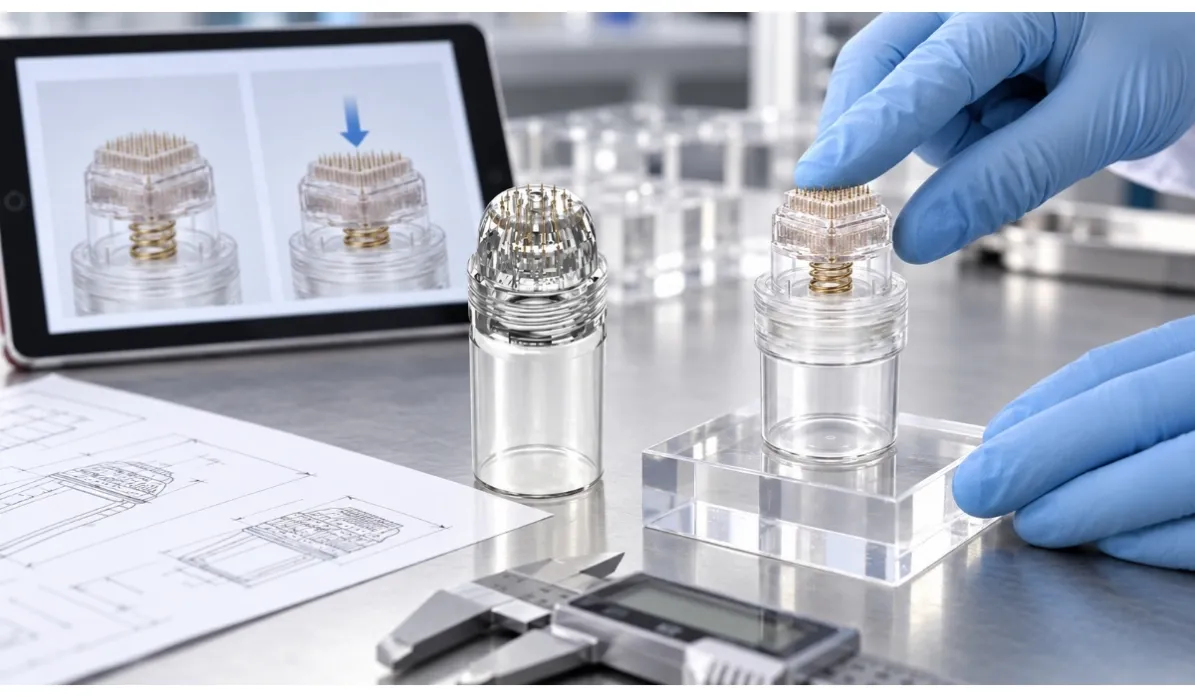
The buyer was not simply looking for a transparent applicator with a similar appearance. They wanted to understand whether our ER24 and ER50 models used the type of spring-loaded pump structure required for their project.
This created an important sourcing question:
Can a buyer confirm a pump micro-infusion device from product photos alone?
Usually, the answer is no.
Two applicators may look similar from the outside while using different internal structures, pressing actions and mechanical controls.
“Pump Style” Should Describe a Mechanism
The word “pump” is sometimes used loosely in product listings.
It may describe:
- A spring-loaded pressing structure
- A manually pressed dispensing action
- A vacuum-assisted serum-delivery system
- A movable treatment head
- Or simply the product’s external appearance
These descriptions are not interchangeable.
For the UK project, we first needed to understand which movement the buyer expected during use. We then compared a standard micro-infusion model with our pump-structure models through actual product videos.
The objective was not to decide which device looked more premium. It was to confirm how the mechanism moved and returned during operation.
What Photos Cannot Show
A product photo can help a buyer evaluate:
- General device shape
- Color and transparency
- Reservoir appearance
- Approximate treatment-head design
- Available logo area
But it normally cannot confirm:
- Whether the treatment head moves when pressed
- How smoothly the structure returns
- Whether the movement is controlled by a spring
- Whether a mechanical stop is built into the structure
- How much pressure is required
- Whether the components remain secure after repeated pressing
- How the device should be assembled and filled
- Whether the actual operation matches the intended home-use concept
Even a short product video is more informative than a group of static photos when the internal movement is the main purchasing requirement.
Why the Mechanical Stop Matters
In a spring-loaded applicator, the mechanical stop is part of the physical structure that controls how far the moving component can travel.
It should not be confused with a marketing statement about treatment depth.
Actual interaction with the skin can still be affected by factors such as application pressure, skin elasticity and the way the device is held.
For this reason, the supplier should explain what the mechanical structure controls—and avoid suggesting that one internal component guarantees an identical result under every use condition.
The buyer should evaluate the device as a complete applicator rather than relying on a single specification.
How We Compared the Models for This Buyer
For this project, we prepared a comparison between:
- A standard E24 micro-infusion device
- The ER50 pump-structure model
- The relevant pump-style configuration requested by the buyer
The comparison focused on visible operation:
- How the treatment head moves when pressed
- How the spring structure returns
- How the mechanical limit works
- How the reservoir and treatment head connect
- How the complete device is handled during use
This allowed the buyer to determine whether the proposed models matched the product concept more accurately before arranging samples.
A comparison video is useful for initial screening, but it should not replace physical sample evaluation when the mechanism is a core part of the finished product.
Ask for More Than a Product Catalogue
When sourcing a private label pump micro-infusion device, buyers should request:
- A side-view operation video
- A close-up video of the pressing and return action
- An assembly demonstration
- Confirmation of the internal mechanism
- Product specifications for the exact proposed model
- Information about reusable and replaceable components
- Packaging configuration
- A physical sample for repeated operation testing
If the supplier describes the structure as proprietary or patented, the buyer can also ask which specific structural feature the claim relates to and what supporting information is available for review.
A patent claim and a product-performance evaluation answer different questions. Neither should replace sample testing.
What Should Be Checked on the Sample?
After receiving the device, repeatedly test the pressing mechanism before evaluating appearance or customized packaging.
Check whether:
- The movement feels consistent
- The head returns normally after each press
- The components remain aligned
- The head or reservoir becomes loose
- Assembly requires excessive force
- The device operates in the same way shown in the supplier’s video
- The structure is suitable for the buyer’s planned user instructions
Record any difference with a short video. This is more useful than feedback such as “the pump does not feel right.”
Confirm the Structure Before Customization
Logo printing and retail packaging should begin only after the functional structure has been selected.
A brand can change the box, surface color and logo position later. Changing the internal mechanism after packaging development may require new dimensions, new instructions and another round of sample approval.
For projects where the pressing action is an important part of the product concept, the practical sequence is:
- Confirm the expected operating action
- Compare the relevant models by video
- Test physical samples
- Select the final device structure
- Develop the private label packaging and instructions
BegoSkin supplies standard and pump-structure micro-infusion models for private label projects.
Tell us whether you are comparing a conventional applicator with a spring-loaded pump model, and we can prepare the appropriate product comparison before sampling.
Would you prefer to review an operation video first, or compare both structures through physical samples?