Microneedling OEM & Private Label
How to Develop a Private Label Micro-Infusion Kit Inspired by a Leading Brand
Want to develop a micro-infusion kit inspired by a leading brand? Learn how to benchmark devices, serum formulas, packaging and costs for your own OEM project.
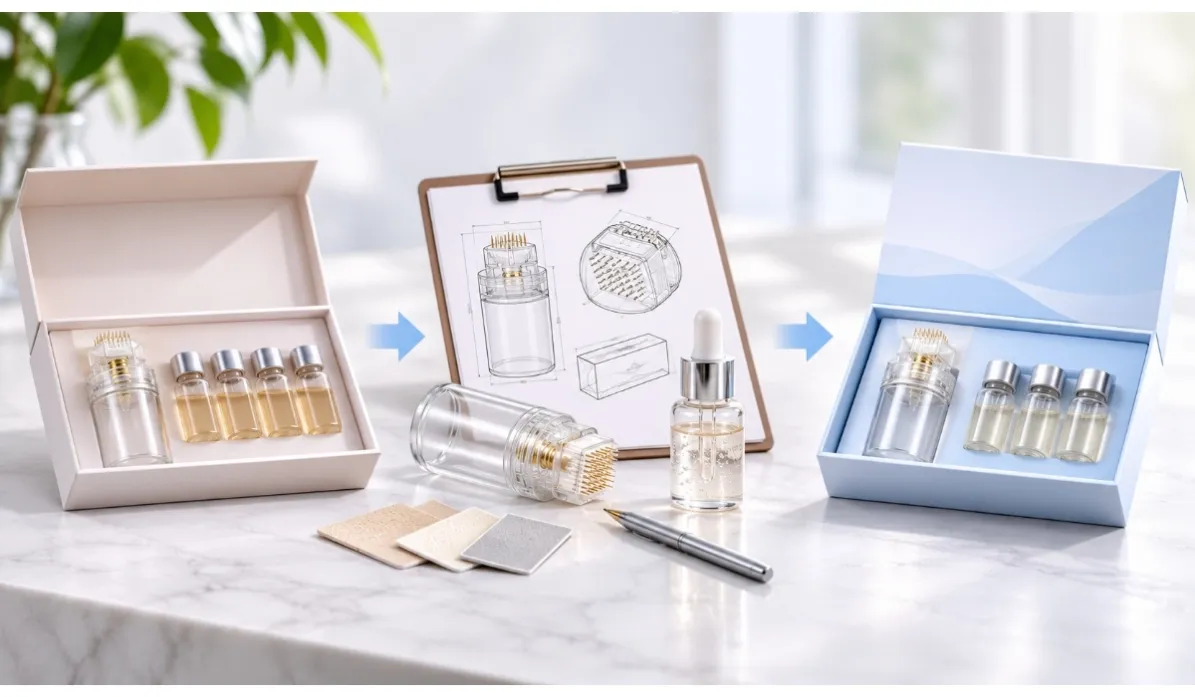
When beauty brands enter the micro-infusion market, they often begin by studying products from established competitors.
A successful brand may already have an attractive device, a recognizable serum concept, and a well-designed retail kit.
Naturally, new brands want to understand whether they can develop something similar.
But an important question comes first:
How can you use a leading brand's product as a reference without simply copying it?
The answer is to approach the project through product benchmarking.
Instead of asking a supplier to reproduce a competitor's product, brands should identify which features they want to achieve and develop their own specifications.
1. A Real Buyer Question: Can We Develop Something Similar?
Recently, a UK customer approached BEGOSKIN while exploring a private label scalp micro-infusion system.
The project involved several components:
- A scalp micro-infusion device
- A cosmetic scalp serum
- A branded retail kit
- Different product configurations
The customer was interested in developing a product concept comparable to established products in the market.
However, a reference product alone was not enough to prepare an accurate OEM proposal.
We first needed to understand which features were most important to the buyer.
Was the priority the device structure, serum ingredients, treatment quantity, packaging presentation, or target price?
Each answer could lead to a different development solution.
2. Step One: Identify What You Want to Benchmark
A competitor's product can be evaluated from several perspectives.
Device Design
Consider the applicator's appearance, needle specifications, dispensing mechanism, and handling experience.
Serum Concept
Review the ingredient positioning, cosmetic benefits, texture, and available product information.
Kit Configuration
Identify how many devices, ampoules, and accessories are included.
Packaging
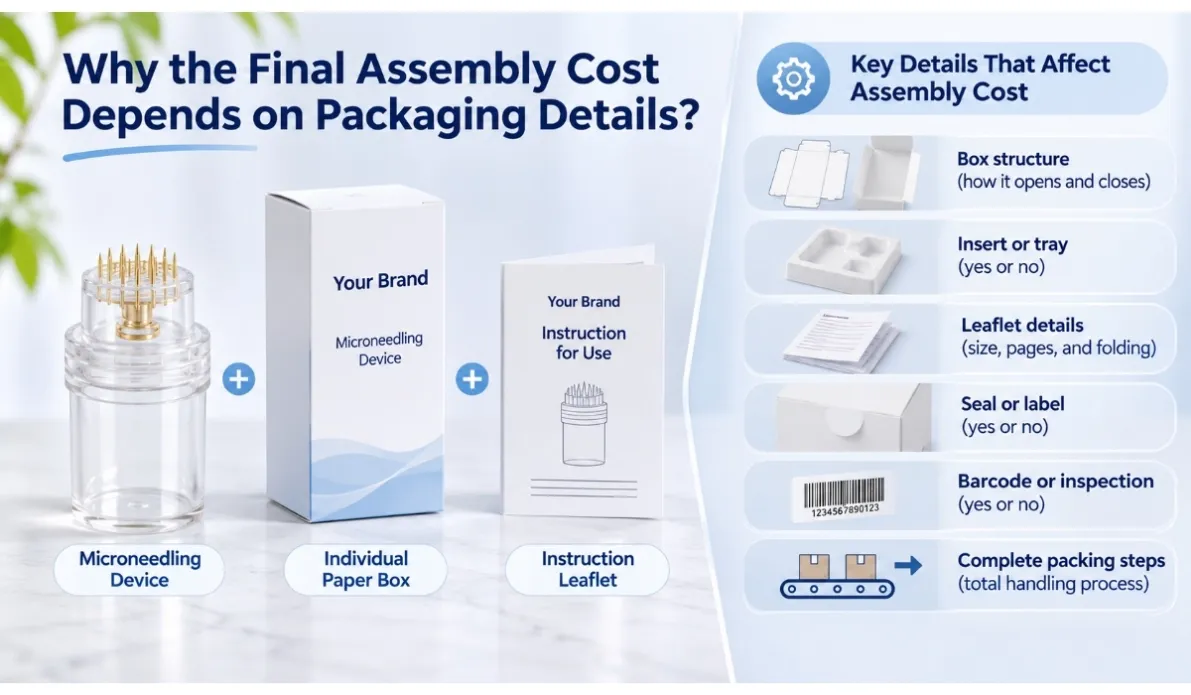
Evaluate the retail box, component arrangement, product instructions, and overall presentation.
Market Positioning
Understand the target customers, sales channels, and retail price range.
The objective is to identify the product features that matter to your brand—not to reproduce every detail of the competitor's design.
3. Step Two: Compare Available Device Options
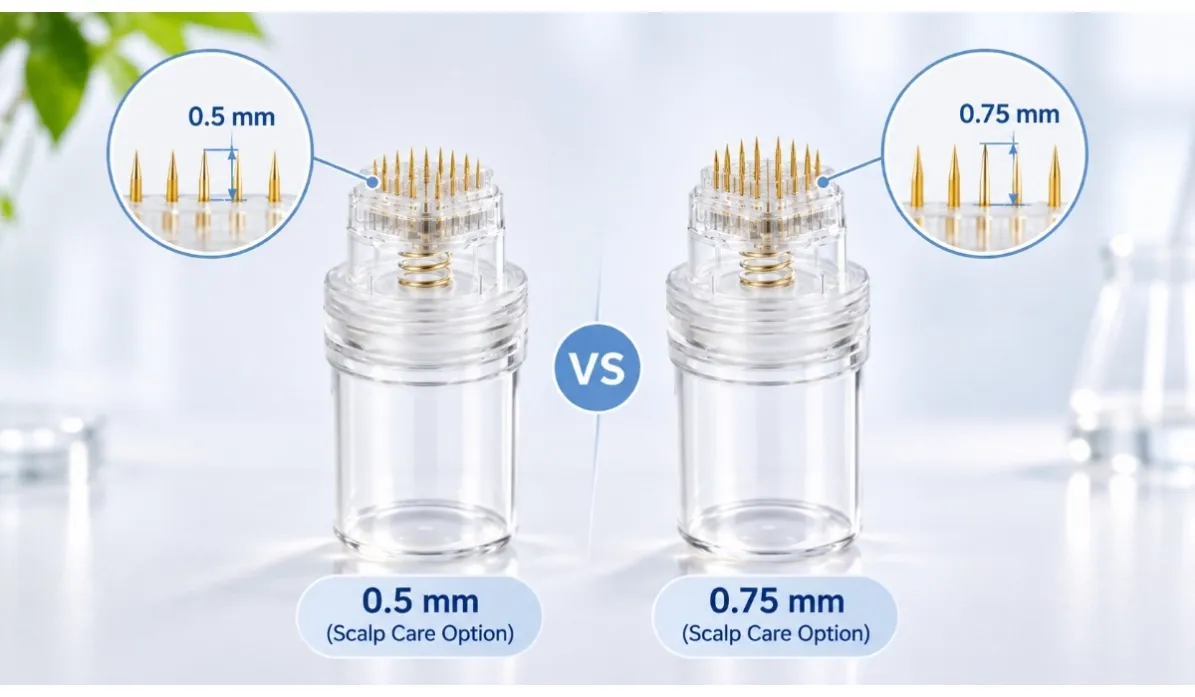
For the UK scalp-care project, we discussed two possible device directions.
E24 — Standard Micro-Infusion Device
A practical option for brands evaluating a conventional applicator design.
ER50 — Pump-Structure Micro-Infusion Device
An alternative for brands interested in a spring-loaded pressing mechanism and a different operating experience.
The appropriate choice depends on the product concept and technical requirements.
Rather than selecting a device based only on photographs, buyers should review specifications and evaluate physical samples.
The device should be selected for its suitability for the proposed application, not simply because it resembles a competitor's product.
4. Step Three: Evaluate the Serum Formula Separately
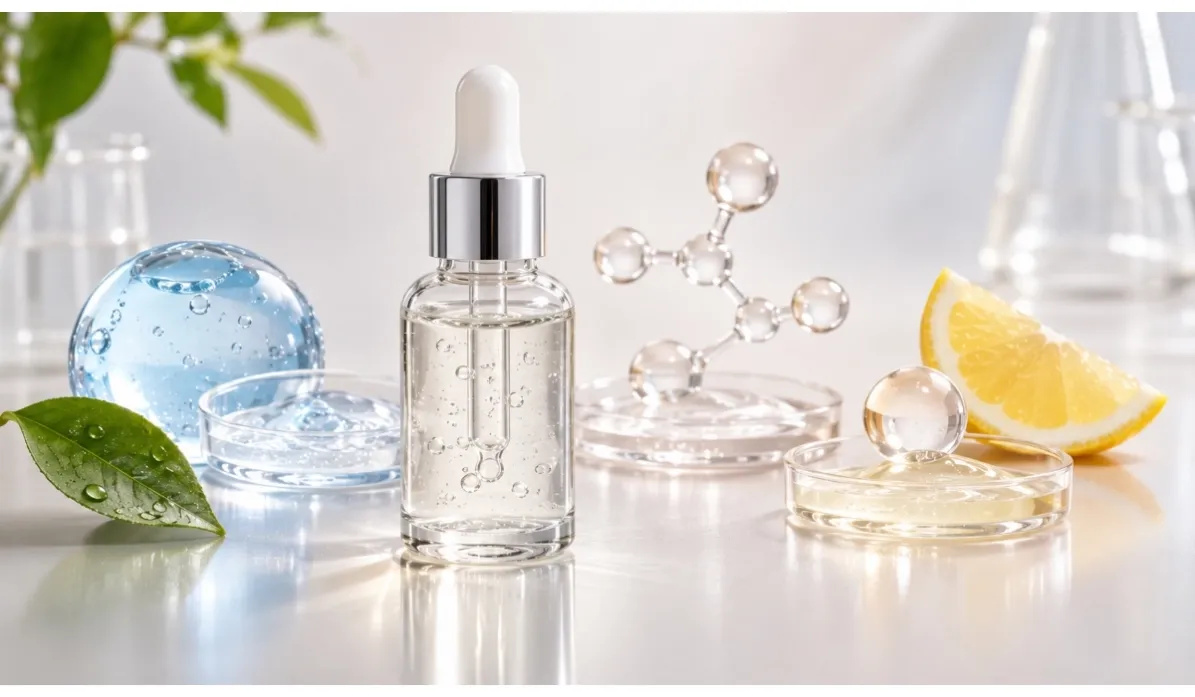
Many established micro-infusion brands promote their products using recognizable skincare ingredients.
For scalp-care concepts, copper peptides such as GHK-Cu may be among the ingredients buyers want to investigate.
However, seeing an ingredient on a competitor's label does not reveal the complete formulation.
An INCI list generally does not provide exact ingredient concentrations, processing methods, or the full formulation system.
There are two common development approaches.
Option A: Evaluate an Existing Formula
The supplier provides an available cosmetic serum formulation for initial evaluation.
This may reduce the amount of early-stage formulation development required.
Option B: Develop a Customized Formula
The brand identifies its desired ingredients, cosmetic benefits, texture, and other requirements.
The laboratory then evaluates technical feasibility and prepares a development plan.
A customized formula may require additional sampling, stability testing, and cost evaluation.
A similar ingredient list does not guarantee equivalent product performance.
Any claims of comparable effectiveness require appropriate supporting evidence.
Importantly, a cosmetic serum produced under GMP conditions is not automatically sterile or suitable for introduction through microneedling-created skin channels.
The intended application must be reviewed separately.
5. Step Four: Build Your Own Kit Configuration
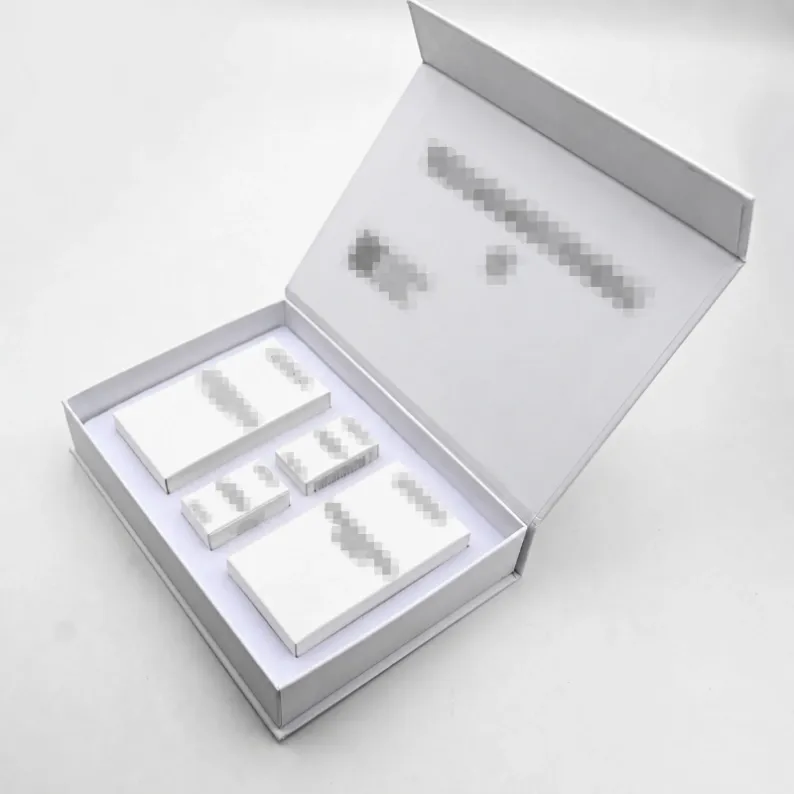
After selecting the device and serum direction, the next step is to define the retail kit.
For example, a brand may consider:
Starter Kit
A compact configuration containing the selected device and cosmetic skincare components.
Extended Kit
A larger configuration containing additional devices or replacement components, depending on the intended product design.
For the UK project, we discussed possible one-month and three-month product configurations.
However, the final contents should be based on the brand's intended use, appropriate instructions, and commercial requirements.
The number of components in a competitor's kit should not automatically determine your own configuration.
A brand should also consider packaging dimensions, shipping costs, inventory management, and customer convenience.
6. Step Five: Understand What Can and Cannot Be Replicated
Product benchmarking is a legitimate part of OEM development, but brands should respect intellectual property rights.
A supplier may help evaluate general product features such as:
- Device specifications
- Available mechanisms
- Cosmetic ingredient concepts
- Kit quantities
- Packaging formats
- Material options
However, copying a competitor's protected product design, trademark, artwork, or patented technology may create legal risks.
Brands should also avoid claiming that their products have the same performance as a leading competitor without supporting evidence.
The better approach is to develop a product with a clear identity and independently verified specifications.
7. Step Six: Validate the Product Before Customizing the Packaging
Once a preliminary configuration has been selected, physical samples should be evaluated.
For a scalp micro-infusion project, sample evaluation may include:
- Device construction and operation
- Needle specifications
- Component assembly
- Serum packaging and stability
- Intended-use documentation
- Overall kit presentation
The device and serum should be evaluated according to their respective safety and regulatory requirements.
After the product specifications are confirmed, the brand can proceed with logo placement, packaging artwork, and commercial quotations.
This reduces the risk of investing in customized packaging before the core product has been approved.
8. What Information Should You Send Your OEM Supplier?
If you want to develop a product inspired by a leading brand, a useful starting point is to provide:
- A link or photographs of the reference product.
- The specific features you want to benchmark.
- Your preferred device type.
- Your target cosmetic serum concept.
- Your expected kit configuration.
- Your target market and intended use.
- Your estimated order quantity and budget.
The supplier can then identify which requirements can be supported by existing products and which may require further development.
This creates a more efficient process than asking for a quotation based only on a competitor's photograph.
Conclusion: Benchmark the Product, Build Your Own Brand
Leading beauty brands can provide valuable references for product development.
However, successful private label development requires more than reproducing an existing product.
The objective should be to understand what makes the reference product relevant to your customers, then develop a suitable device, serum concept, and retail kit under your own brand.
A structured benchmarking process helps reduce unnecessary sampling, unclear quotations, and costly changes during development.
Want to Develop Your Own Micro-Infusion Kit?
BEGOSKIN supports private label micro-infusion projects through our manufacturing and formulation partners.
We can help evaluate reference products, compare available device configurations, and coordinate cosmetic serum and packaging development.
Do you have a reference micro-infusion product you would like to benchmark?
Share the product link and your key requirements with our team to discuss possible OEM development options.