Microneedling OEM & Private Label
Can You Increase Active Ingredient Concentrations in a Custom Microneedling Serum?
Can you increase peptides or other active ingredients in a custom serum? Learn what brands should check before adjusting concentrations and approving OEM samples.

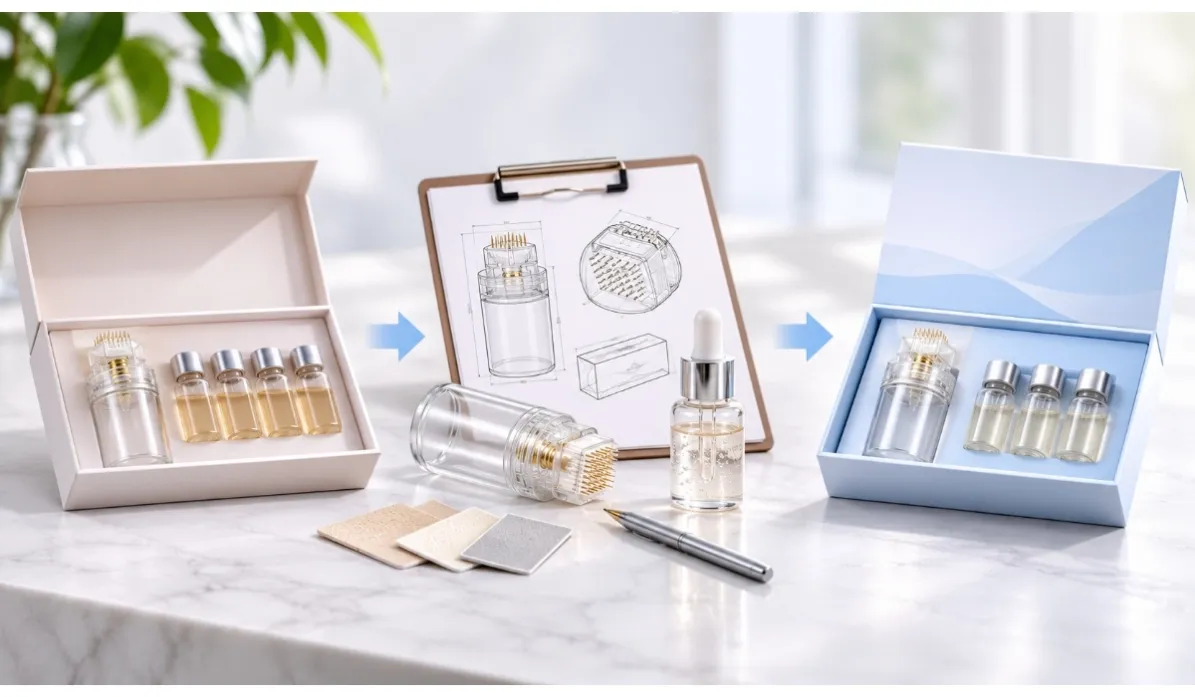
When developing a private label micro-infusion kit, beauty brands often begin by testing an existing serum formula.
After evaluating the samples, some buyers request changes to the active ingredients.
For example, a brand may ask:
“Can we increase the concentration of certain active ingredients to create a more premium serum?”
The answer is that adjustments may be possible, but increasing ingredient concentrations is not always a straightforward process.
Before modifying a formula, cosmetic manufacturers need to evaluate ingredient compatibility, formulation stability, product safety, and manufacturing costs.
Understanding these considerations can help brands make better decisions during OEM serum development.
1. A Real Customer Question: Can We Increase the Active Ingredients?
Recently, a European skincare brand evaluated serum samples for a private label micro-infusion product.
After testing the initial formulation, the customer expressed interest in adding selected ingredients and increasing their concentrations.
Our formulation team reviewed the request and confirmed that adjustments could be evaluated.
However, before preparing a revised sample, several details needed clarification:
- Which ingredients should be increased?
- Does the brand have a target concentration?
- What skincare benefits does the brand want to emphasize?
- Will the serum be positioned for cosmetic topical use?
These questions are important because changing one ingredient may affect the performance and stability of the entire formulation.
2. Does a Higher Active Ingredient Concentration Mean Better Results?
Not necessarily.
A higher concentration does not automatically produce better skincare results.
The performance of a cosmetic formula depends on multiple factors, including ingredient quality, concentration, formulation compatibility, and supporting efficacy evidence.
For example, increasing the concentration of a peptide may affect formulation cost without necessarily producing a proportional improvement in cosmetic performance.
Some ingredients also have recommended usage ranges or technical limitations.
Therefore, the objective should not simply be to maximize the concentration of active ingredients.
The goal is to develop a balanced formulation that supports the brand's intended cosmetic benefits.
3. What Should Be Evaluated Before Increasing Concentrations?
Before adjusting a serum formula, the laboratory should consider several technical factors.
Ingredient Compatibility
Some active ingredients may interact with other components in the formulation.
Increasing their concentrations could affect the compatibility of the overall formula.
Formulation Stability
Changes in ingredient concentration may influence:
- Color
- Odor
- Viscosity
- pH
- Appearance
- Long-term stability
A formulation that performs well at one concentration may require further testing after adjustment.
Skin Compatibility
Higher concentrations may also affect skin tolerance.
This is especially important when developing products associated with microneedling devices.
A cosmetic serum manufactured under GMP conditions should not automatically be considered suitable for application to punctured or compromised skin.
Any intended use involving skin penetration requires separate safety and regulatory evaluation.
Manufacturing Cost
Some active ingredients, particularly specialized peptides, can contribute significantly to formulation costs.
Increasing their concentrations may affect the final unit price.
4. Why Is a New Sample Necessary After Formula Adjustment?
A common question from private label buyers is:
“Can the manufacturer provide a final quotation immediately after we request a higher concentration?”
In many cases, the laboratory must first evaluate the proposed changes.
Depending on the formulation, this may involve:
- Reviewing the requested ingredient adjustments.
- Confirming technical feasibility.
- Preparing a revised laboratory sample.
- Conducting appropriate stability and compatibility assessments.
- Recalculating formulation and manufacturing costs.
The revised sample allows the brand to evaluate the product before approving commercial production.
It also helps prevent situations where the final product differs significantly from the original approved sample.
5. What Information Should Brands Provide to the Laboratory?
To make formulation development more efficient, brands should provide clear requirements.
The most useful information includes:
Target ingredients
Identify the specific ingredients the brand wants to add or increase.
Preferred concentration
If a target concentration is available, provide it for technical evaluation.
If not, the laboratory can assess possible formulation options.
Desired cosmetic benefits
For example:
- Hydration
- Skin-conditioning
- Improved appearance of firmness
- Brighter-looking skin
- Support for the skin barrier
Target market
Different markets may have different cosmetic ingredient restrictions and product classification requirements.
Intended application
Clarify whether the serum is intended for ordinary topical skincare, post-treatment use on intact skin, or another application.
This distinction is essential when evaluating product safety.
6. Can the Original Formula Be Used as a Starting Point?
Yes.
For many private label projects, an existing formulation can provide a practical starting point.
Instead of developing an entirely new formula, the laboratory may evaluate adjustments to selected ingredients.
This approach can help brands:
- Define their preferred ingredient profile.
- Compare initial and revised samples.
- Evaluate the effect of formulation changes.
- Make more informed decisions before commercial production.
However, an existing formula should not be assumed to remain stable or safe after modification.
The revised formulation must be assessed on its own merits.
7. How Should Brands Plan the Next Development Step?
If a brand is satisfied with the general texture and appearance of an existing serum but wants to adjust the active ingredients, we recommend starting with a focused formulation review.
Rather than requesting multiple changes simultaneously, identify the most important ingredient or performance objective first.
This gives the laboratory a clearer development target.
For example, a brand may prioritize a specific peptide rather than requesting higher concentrations of every active ingredient in the formula.
Once the requirements are confirmed, the laboratory can evaluate feasibility and prepare a revised sample where appropriate.
For brands still selecting their device structure, our related guide explains the differences between solid and hollow microneedles.
Conclusion
Increasing active ingredient concentrations in a custom serum may be possible, but the decision should be based on formulation science rather than concentration alone.
Brands should consider ingredient compatibility, stability, skin tolerance, regulatory requirements, and production costs before approving changes.
A clearly defined formulation objective helps both the brand and manufacturer reduce unnecessary development cycles.
Developing a Custom Serum for Your Beauty Brand?
BEGOSKIN supports OEM/ODM cosmetic serum development through our formulation partners.
We can evaluate requests for selected active ingredients, concentration adjustments, and customized cosmetic formulations.
Which active ingredient would you like to add or increase in your serum?
Share your requirements with our team for an initial formulation assessment.