Microneedling OEM & Private Label
Does a Cosmetic Scalp Serum Need Ice Packs During Shipping?
A U.S. buyer asked whether a cosmetic scalp serum requires ice packs. Learn how the formula, packaging and stability data determine shipping conditions.
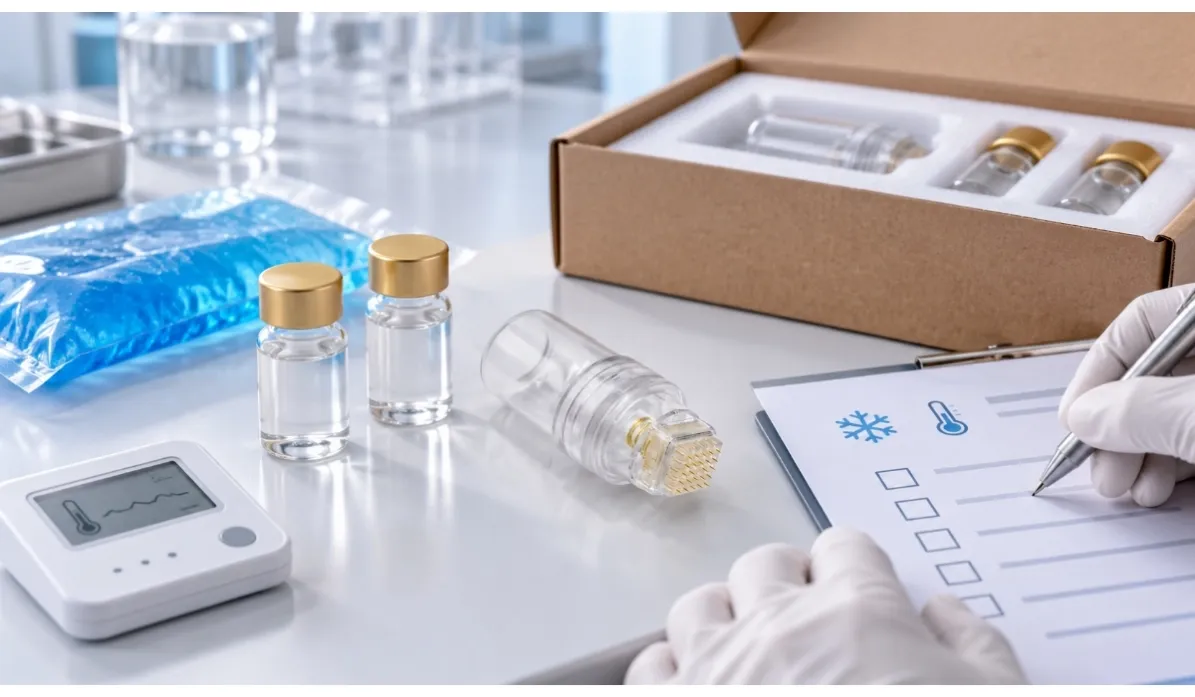
A U.S. buyer recently contacted us about sourcing a microneedling device and a peptide-based scalp serum.
While discussing the sample configuration, the buyer asked whether the serum would need to be shipped with ice packs.
This is an important question, especially when a formula contains ingredients commonly described as peptides or scalp-care actives.
However, the word “peptide” does not automatically mean that a product requires refrigerated transportation.
The shipping conditions should be based on the final formula, product category, packaging and available stability information—not on one ingredient name alone.
Our Current Scalp Serum Does Not Require Ice-Pack Shipping
For the cosmetic-grade scalp serum currently discussed with this buyer, our laboratory confirmed that ice-pack shipping is not required.
The serum is developed as a topical cosmetic scalp-care formula. It is not positioned as an injectable product, a pharmaceutical peptide preparation or a sterile drug product.
It is manufactured by a cosmetic manufacturer operating under applicable GMP and controlled clean-production conditions.
However, manufacturing standards and shipping temperatures answer two different questions.
GMP relates to how the product is manufactured and controlled. Whether the finished serum needs refrigeration depends on the stability of the final formula in its intended packaging.
Cosmetic Peptides Do Not Automatically Mean Cold Chain
Buyers sometimes associate the word “peptide” with refrigerated pharmaceutical or injectable products.
Cosmetic formulas are different finished systems.
A peptide ingredient may be used together with water, humectants, preservatives, stabilizers and other cosmetic ingredients. Its performance within the finished product depends on factors such as:
- The exact ingredient and concentration
- The complete formula
- The pH of the serum
- The preservative system
- Exposure to light and air
- The primary container
- The validated storage conditions
Therefore, it is not professional to decide that a serum needs—or does not need—cold-chain shipping only by reading “peptide” on an ingredient list.
The finished formula must be evaluated as a whole.
Ice Packs Are Not Automatically a Sign of Higher Quality
Refrigerated shipping can be necessary for products that have confirmed temperature-sensitive storage requirements.
But adding ice packs to every serum shipment does not automatically improve product quality.
If cold transportation has not been specified for the formula, unnecessary ice packs may:
- Increase international shipping weight and cost
- Create condensation inside the parcel
- Expose products to uncontrolled local cold spots
- Make customs clearance and delivery arrangements more complicated
- Give distributors and consumers incorrect storage expectations
The correct goal is not to make the shipment as cold as possible. It is to keep the product within the storage conditions supported for that specific formula and packaging.
What Should a Buyer Confirm Before Shipping?
Before arranging samples or bulk transportation, buyers should ask the supplier to confirm:
- Product category Is the serum supplied as a cosmetic product, or is the buyer expecting a pharmaceutical, sterile or injectable preparation?
- Recommended storage conditions Does the finished product require refrigeration, controlled room temperature or protection from excessive heat and direct sunlight?
- Final formula Has the confirmed formula changed from the version used for the available stability evaluation?
- Primary packaging Will the serum be filled into the same vial, bottle or container used during product evaluation?
- Shipping environment Will the shipment face unusually high temperatures, long transit times or extended storage at a port or warehouse?
These points should be confirmed using the final commercial configuration—not only an early laboratory sample.
Hot-Weather Shipping Is a Separate Question
A product that does not require refrigeration may still need protection from prolonged exposure to excessive heat.
For example, shipping conditions may need additional review when goods are transported during a very hot season, held in an uncontrolled warehouse or delayed in customs.
This does not necessarily mean that ice packs are required.
Depending on the confirmed product requirements, the supplier and buyer may instead review:
- The shipping route and expected transit time
- Seasonal temperature exposure
- Insulated outer packaging
- Carton placement and pallet protection
- Temperature monitoring for a trial shipment
The solution should match the actual transportation risk.
Do Not Finalize Shipping Before the Formula Is Confirmed
Changing the formula, active concentration or primary packaging may affect the recommended storage and shipping conditions.
For this reason, a supplier should not confirm cold-chain requirements only from a preliminary ingredient request.
The practical sequence is:
- Confirm whether the project requires a cosmetic scalp serum.
- Select or develop the formula.
- Confirm the primary packaging.
- Review the available stability and storage information.
- Define the appropriate shipping method.
In this U.S. inquiry, we first clarified that our current scalp serum is a cosmetic-grade topical product and does not require ice-pack shipping.
We also asked the buyer to confirm whether this cosmetic positioning matches the intended project before moving forward with the complete quotation and sample configuration.
This clarification prevents both sides from developing the wrong type of product.
Planning a Private Label Scalp Micro-Infusion Kit?
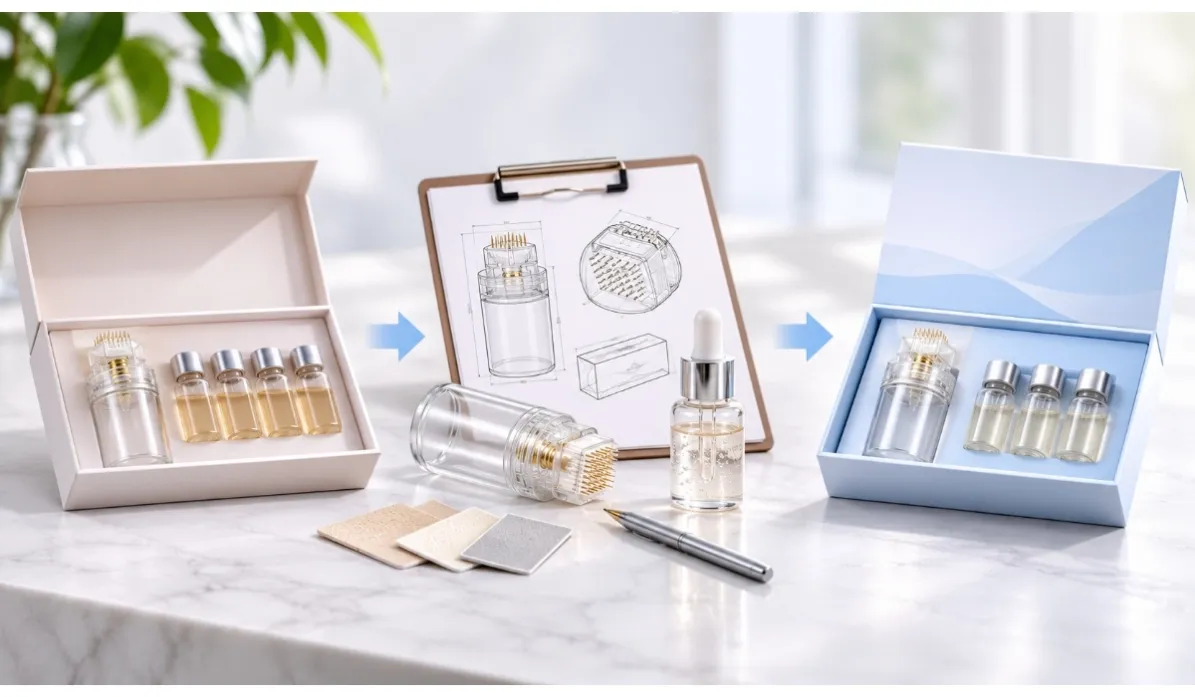
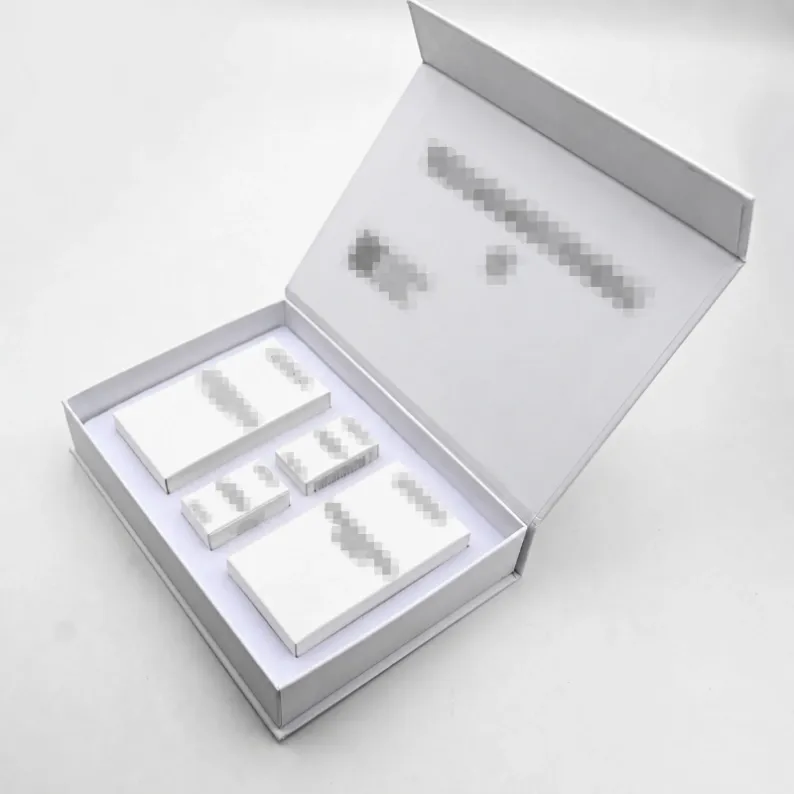
BegoSkin supports beauty brands with scalp micro-infusion devices, cosmetic scalp serums, replacement treatment heads and customized kit packaging.
To recommend an appropriate sample configuration, please provide:
- Your target market
- Cosmetic or other intended product category
- Preferred device model
- Serum requirements
- Primary packaging preference
- Expected shipping destination
We can then confirm the product configuration before preparing the sample and shipping proposal.
Does your project require a cosmetic scalp serum, or are you looking for a refrigerated pharmaceutical preparation?